The Commercial Drone Media Playbook for Charlotte CRE
FPV walkthroughs, exterior aerials, and brand content for office, retail, industrial, developments, businesses, and hospitality, scoped per project.
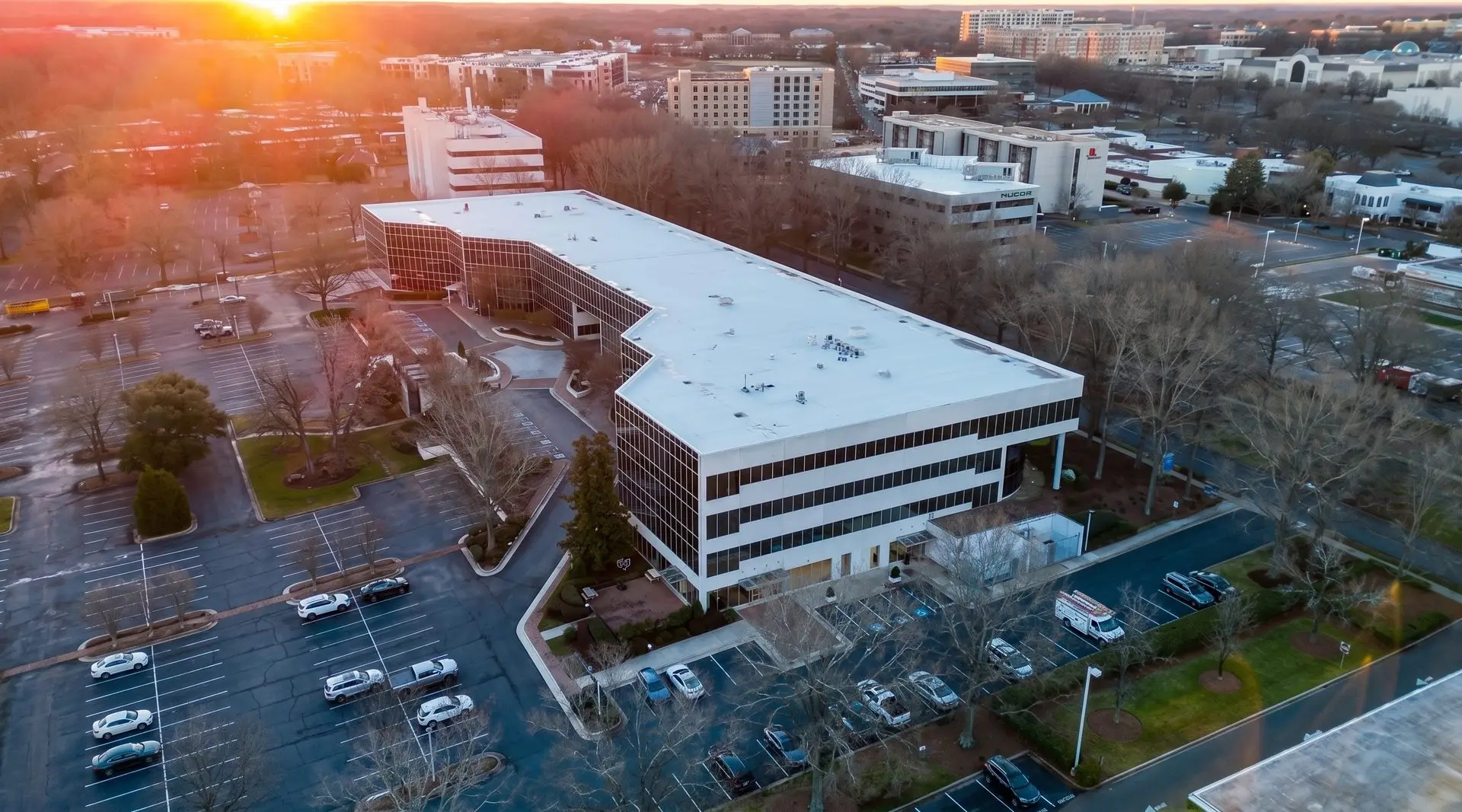
Commercial drone media is a different job than residential. The audience isn’t a homebuyer scrolling Zillow on a Sunday, it’s a tenant rep, an acquisitions analyst, an LP, a franchise director, or a buyer looking at a business from out of state. The brief is different, the deliverables are different, and the thing the footage has to do is different: it has to communicate value to someone whose decision involves capital, timelines, and risk, not square footage and countertops.
This is the playbook across the four commercial verticals we shoot in Charlotte: CRE, developments, business spaces, and restaurants/hospitality. Each one has its own pattern for how FPV and aerial media actually moves the deal forward.
Why commercial reads differently than residential
Residential media optimizes for emotion and shortlist logic. A buyer sees ten houses, picks three to tour, and the media’s job is to make it onto that shortlist.
Commercial media optimizes for pre-qualification. A tenant rep evaluating twenty office suites, a franchise operator looking at retail build-outs in three cities, an out-of-state buyer eyeing a business sale, none of them can visit every location. The media has to do enough work on its own that by the time someone books a site visit, they’re already leaning in.
That changes the shot list. Commercial footage needs to show:
- Scale and layout that a floor plan alone can’t communicate
- Access, parking, and site context for operations and logistics decisions
- Finish level, lighting, and daypart that signal how the space actually operates
- Surrounding density, frontage, visibility that drive location value
FPV handles the interior continuity, walking a decision-maker through the space without a cut. Aerial handles the site context, access, footprint, what’s next door, what the drive to the interstate looks like. Together they collapse a site visit into a minute of video.
01. Commercial Real Estate
Office, retail, industrial, mixed-use. The core CRE use case for drone media is leasing velocity: how fast a listed space moves from active to LOI.
The bottleneck on a standard CRE listing is usually the tenant tour cycle. A leasing broker lines up twenty showings, half of them no-show or arrive unprepared, and the space sits. An FPV interior flythrough paired with exterior aerials does two things to that cycle:
- Pre-qualifies the tour. Prospects who watch the flythrough and still want to visit are materially more serious. The walkthrough is no longer a discovery meeting, it’s a confirmation meeting.
- Extends the reach. The same media works on a Crexi listing, a broker’s email to a qualified tenant list, a LinkedIn post, and a tenant rep’s deck. One capture, many channels.
For tenant-facing leasing video, the edit is tight, 45 to 90 seconds, no voice-over, music scored to the pacing of the space. The room sells itself.
For investor-facing material, the deliverable shifts toward aerials: multi-parcel site overviews with access route context, loading dock and parking orientation, distance to interstate, proximity to demand drivers. The kind of information that lives on page four of an OM and is almost always undersold with a static Google Maps screenshot.
We also shoot a specific CRE subcategory that most operators don’t think of as CRE at all: remote business tours for M&A brokers. When Trustmark or another business brokerage has a non-resellable business sale, a gym, a restaurant group, a private school, a franchise, out-of-state buyers can’t tour on-site without outing the sale to staff. An FPV walkthrough delivered to a secure link, behind an NDA, solves that. The M&A remote tour post covers that workflow in detail.
02. Developments and Construction
This is a different content model than listing media. Development work is recurring, monthly or bi-weekly captures over the life of a project, and the value isn’t in any single delivery but in what stacks over time.
The defining technical requirement is frame registration: every capture at the same altitude, heading, and composition. That’s what makes the footage stack into a real timeline instead of a collage of random aerials. A progress reel built from twelve registered captures reads as a building going up in twelve seconds. A reel built from unregistered captures reads as a marketing team with no consistency.
For pre-sale marketing, off-plan residential, build-to-suit commercial, phased development, aerial delivers the thing renderings can’t: proof that something is actually happening on the site. Buyers looking at a Q3 delivery want to see foundation work in Q1. Investors want month-over-month evidence that capital is being deployed.
For LP updates and investor reels, we keep the cut short and unnarrated: 60 to 90 seconds of registered captures, site walks, and context aerials. A reel your deck presents around, not a voice-over video that gets skipped.
Developments also introduce a scoping pattern commercial listing work doesn’t have: capture schedules. We typically lock recurring clients into a monthly cadence with a pre-agreed shot list and delivery SLA. Per-capture pricing drops materially at volume. The work pairs well with a broader marketing retainer if the development has a sales microsite, a brokerage tie-in, or ongoing social pressure.
03. Business Spaces
This is the broadest commercial vertical and the one where FPV specifically earns its cost. Retail flagships, showrooms, coworking, salons, studios, medical practices, boutique fitness, any business where the space itself is the pitch.
The pattern is simple: a prospect finds you on Google Maps, Instagram, or a referral, and the decision to walk in is mostly based on what they see online. A static hero photo and a handful of interior stills don’t communicate the experience of the space. A 60-second FPV walkthrough does.
We structure the deliverable stack around how the footage actually gets used:
- A 60-second vertical FPV cut for Instagram, TikTok, and Google Business Profile, the format that runs on the platforms where most discovery happens
- A 2-to-3-minute landscape cut for brand site hero section and YouTube, the version that holds attention once a prospect has clicked through
- HDR exterior stills for local-listing marketing, Google Business, and brand site asset library
- Exterior aerials of the storefront, parking, and street context, the establishing material that situates the business in its neighborhood
One shoot, one invoice, 24-hour turnaround on the vertical cut for social, 3 to 5 days for the cinematic edit. For multi-location brands, we can schedule a route of captures in a single trip and deliver consistent media across locations.
The portfolio is heaviest here on gyms, boutique fitness, and private education, categories where the space is genuinely differentiated and the FPV format renders that differentiation clearly. But the same approach applies to any business where walking in is the reason people choose you.
04. Restaurants and Hospitality
Our most-shot commercial vertical. Restaurants, bars, cafés, hotels, private clubs, event spaces. The places where ambience is the product.
Hospitality content has a specific constraint: the shoot happens pre-open or post-close, because an active service is both a liability issue and a visual mess. That constraint turns into an advantage, pre-open light, empty rooms, staged tables and glassware in the perfect positions. The room looks like the best version of itself.
The FPV interior walk follows the guest experience: entrance, host stand, bar, dining room, private room, patio. The edit cuts to the pacing of the room, a quick tempo for a high-energy bar, a slower float for a white-tablecloth concept. Back-of-house and open-kitchen content is a separate sequence, cut for chef-driven and food-forward concepts that want to foreground the cooking.
Deliverables that perform:
- A 30 to 60-second vertical for Reels and TikTok. The cut optimized for the algorithm your social team already runs.
- A 60 to 90-second landscape cut for the brand website, OpenTable profile, Resy profile, and Google Business.
- Rooftop and exterior aerials for the patio, storefront context, and neighborhood positioning.
- HDR exterior and interior stills for listing platforms and press kits.
How we scope a commercial project
Every commercial project is quoted individually. The variables:
- Square footage and number of floors, drives capture time and editing complexity
- Interior vs. exterior mix, pure interior FPV is tighter scope than a mixed interior-plus-aerial-plus-site-context shoot
- Cinematic vs. standard edit, licensed music, color grade, and motion graphics move the timeline from 24-hour to 3-to-5-day
- Deliverable count, one vertical social cut is different scope than a 90-second landscape + vertical + 12-still package
- Recurring vs. one-off, capture schedules get volume pricing that single-location jobs don’t
Single-location commercial shoots land between $1,000 and $2,200 in most cases. Production-scale FPV with cinema rigs (Blackmagic G2 on the Straw Hat Sam Vulture, ShenDrones cinelifter) is quoted separately starting at a $1,750/day base rate and covered on the production page. Recurring capture schedules for developments, hospitality groups, and multi-location brands get retainer pricing.
Turnaround is 24 hours on single-location commercial shoots, 3 to 5 business days on cinematic edits with licensed music and a full grade.
What every commercial shoot includes
Regardless of vertical:
- FAA Part 107-certified pilots on every job
- $1M liability insurance through SkyWatch.ai, with same-day COI and additional insured endorsement available
- Remote ID-compliant aircraft on every flight
- LAANC authorizations filed for controlled airspace (most of Charlotte sits in CLT’s Class B footprint)
- Unrestricted usage rights on every commercial deliverable, brand, leasing, web, social, paid
The regulations and insurance post covers the compliance picture in detail, including what a COI actually means and what to ask a drone operator before you hire one.
Commercial media lives or dies on whether the footage pre-qualifies the next conversation. A leasing broker doesn’t need a pretty aerial, they need a tenant who shows up to the tour already convinced. A developer doesn’t need a slick reel, they need LPs who see progress every month. A restaurant doesn’t need a sizzle, they need Reels that fill Tuesday tables. Commercial drone media works when the deliverable is scoped to the decision it has to move.
If you’re scoping a commercial project, send location, vertical, square footage, and timeline to contact@oneshotdronetours.com, we quote within 24 hours. For M&A remote tours specifically, the M&A workflow post covers NDA delivery, secure links, and the shot list for confidential business sales. The commercial page has the four verticals laid out with portfolio references.
Related journal posts
Remote Business Tours for M&A: FPV Walkthroughs Without the Plane Ticket
An operational primer on using FPV walkthroughs for business-sale and M&A processes, pre-qualifying buyers remotely, protecting seller confidentiality, and moving deals forward faster.
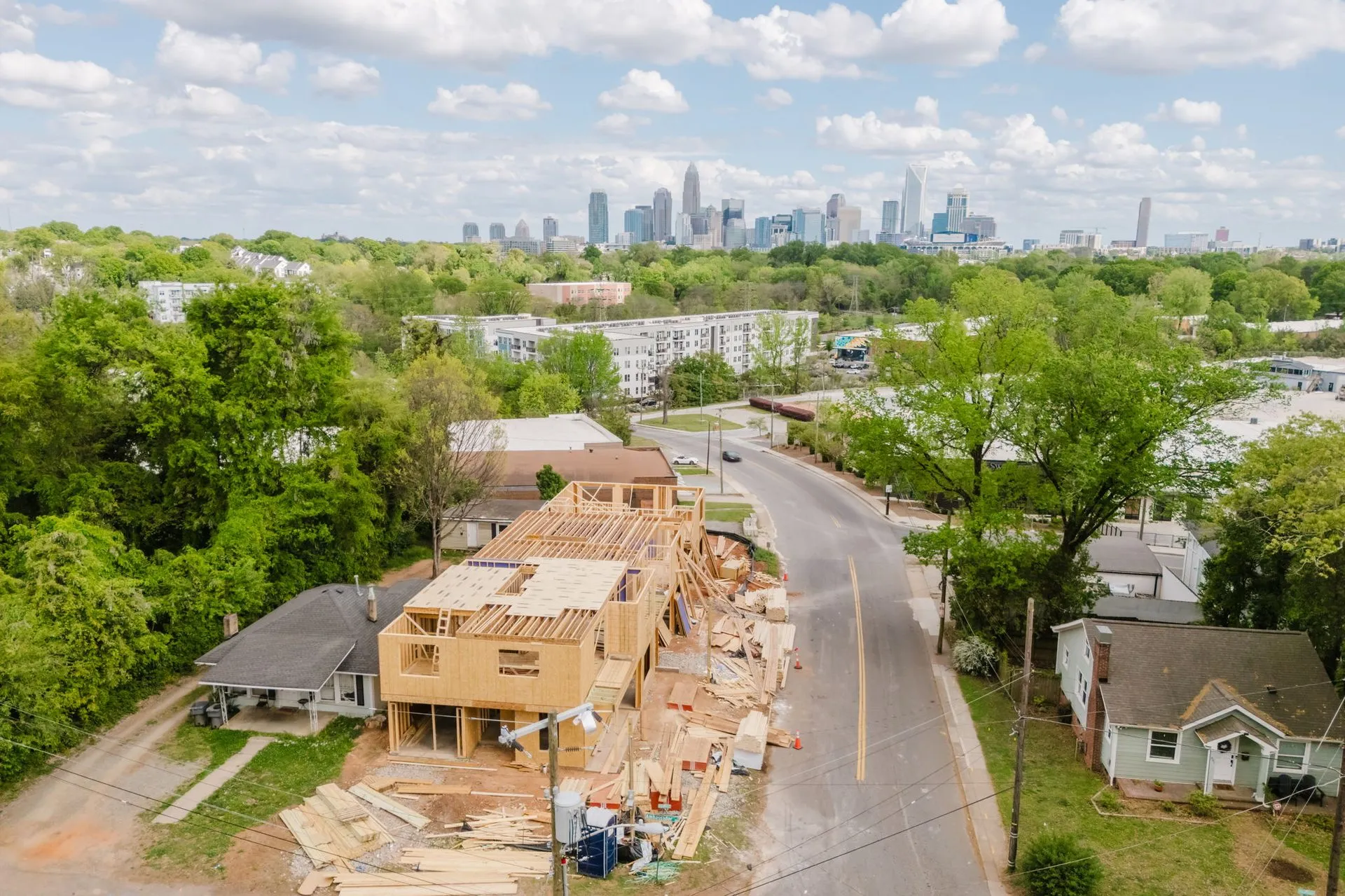
Construction Progress Aerials: How Charlotte Developers Are Documenting Vertical Builds
How Charlotte developers use recurring drone captures to document vertical builds, frame registration, pre-sale marketing, LP updates, and the cadence that turns a year of work into 90 seconds.

Drone Regulations + Insurance: What Clients Should Actually Ask About
A direct explainer on drone regulation and insurance. Part 107, Remote ID, LAANC, liability limits, and what a COI means for your shoot. Written for clients, not pilots.