The State of Commercial Drone Regulation After 2025
Remote ID is fully enforced. Part 108 is in active rulemaking. LAANC has matured. Here's where US commercial drone regulation actually stands in 2026, and what commercial operators should track through 2027.
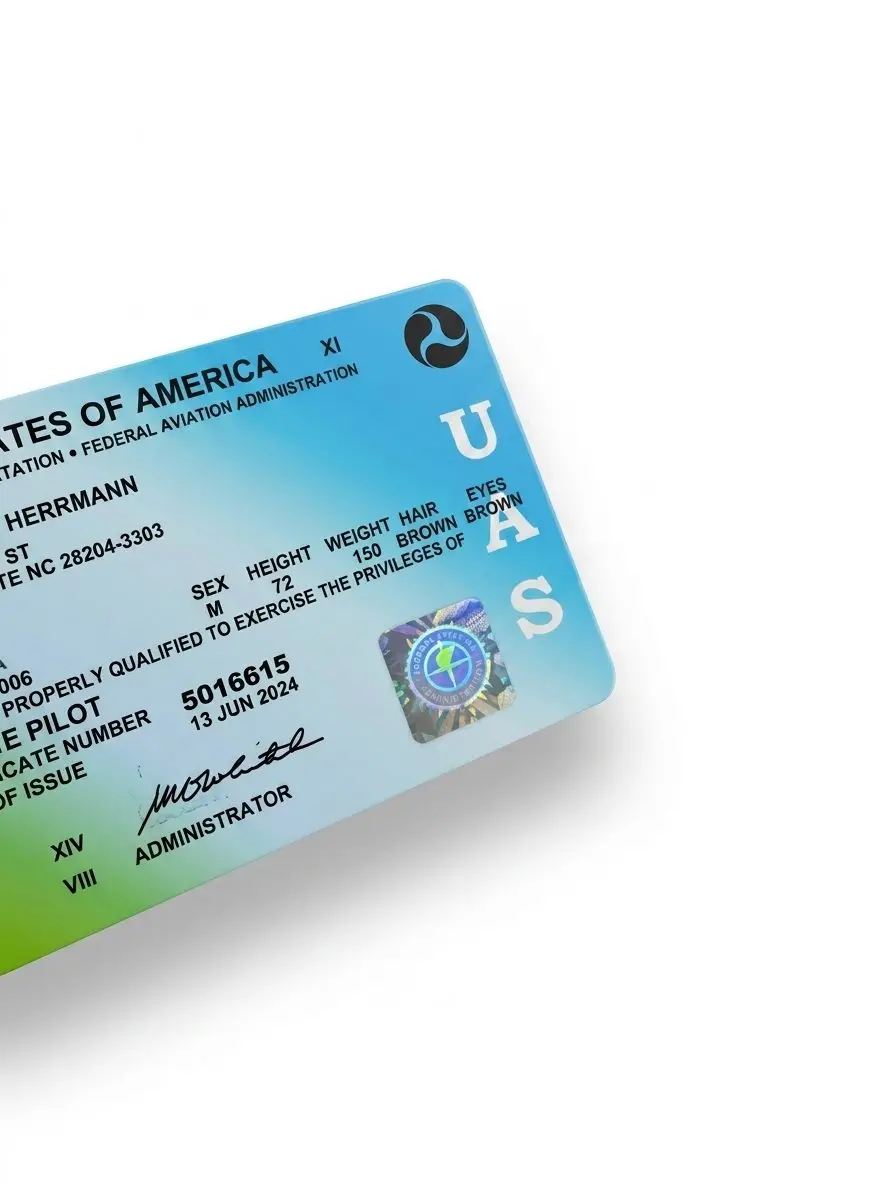
The regulatory landscape for commercial drone operations in the United States has shifted meaningfully in the last 24 months. For clients scoping commercial work, real estate agents, CRE brokers, venue operators, agency producers, most of the change is invisible and therefore ignorable. For operators actually running the flights, the shifts dictate what rigs can go in the case, what airspace is accessible, and what the liability posture looks like.
This is the state-of-the-industry picture in 2026. Written for clients who want to know that their operators are tracking it, and for operators who want a consolidated read on what’s happened and what’s next.
Remote ID, fully enforced, fully baked in
The biggest operational change of the last two years is not new anymore. The FAA’s Remote ID mandate hit full enforcement on March 16, 2024. Since that date, any drone between 0.55 and 55 pounds operating in US airspace is required to broadcast real-time identification, current location, and control station location on standard radio frequencies, readable by law enforcement and FAA inspectors without internet connectivity.
What’s changed in the two years since:
- Aircraft compliance is universal. Every major manufacturer. DJI, Autel, Parrot, Skydio, and the custom-build ecosystem, has Remote ID compliance built into production aircraft. The transition is done.
- Enforcement has started showing up. The FAA’s Reauthorization Act of 2024 expanded authority for federal and state agencies to act on Remote ID data, and civil penalties for non-compliance now run $27,500+ per incident. Enforcement activity is still below the industry’s paranoid forecasts, but it’s no longer zero.
- Broadcast-module retrofits fell off. The separate broadcast modules that consumer pilots were attaching to older drones have largely disappeared, the FAA’s enforcement posture signaled clearly that the cost of non-compliance exceeds the hassle of upgrading the aircraft.
For clients hiring commercial drone operators, Remote ID is now a table-stakes question: do your aircraft broadcast Remote ID? A “no” in 2026 is a disqualifier. The regulations and insurance guide covers what to ask operators before a shoot.
Part 108 BVLOS, active rulemaking, expected finalization 2026
The most consequential regulation still in rulemaking is Part 108, the FAA’s framework for Beyond Visual Line of Sight (BVLOS) operations. Current Part 107 rules require the pilot in command to maintain visual contact with the aircraft; Part 108 would establish a regulatory path for operations where the pilot can’t see the aircraft directly.
Why it matters: BVLOS unlocks the commercial use cases that don’t fit inside Part 107’s visual-contact constraint, infrastructure inspection, long-corridor aerial surveys, delivery operations, large-area agricultural coverage, and multi-location event broadcast. For most real estate and hospitality work, the operational envelope is already well inside visual line of sight, so Part 108 doesn’t change the day-to-day, but it reshapes the commercial drone industry’s growth curve meaningfully.
Where Part 108 stands as of early 2026:
- Notice of Proposed Rulemaking (NPRM) published. The FAA issued the formal rulemaking notice in 2024. Public comment ran into 2025.
- Final rule expected in 2026. Actual finalization has slid from original 2025 projections, but industry observers expect the rule to finalize within 2026.
- Transition pathways are being negotiated. The rule structure currently proposes tiered BVLOS categories with different certification burdens, lightweight BVLOS for specific low-risk operations vs. heavier certification for commercial delivery and complex missions.
For regional commercial operators, the implication is that the work accessible under Part 107 today will remain accessible, and a new category of higher-complexity work will open up gradually as Part 108 finalizes and certification paths mature. Our own commercial practice is scoped inside Part 107 and will remain there for the foreseeable future, the Part 108 use cases are largely outside what real estate, hospitality, and production clients need.
LAANC, mature, fast, and near-universal
The Low Altitude Authorization and Notification Capability (LAANC) system for getting airspace authorization in controlled zones has matured significantly since its 2017 launch.
Where it stands in 2026:
- Near-universal coverage. LAANC authorizations are available across effectively all controlled airspace grids that commercial operators actually fly in. The rare exceptions are specific military facilities and a handful of restricted zones that require manual FAA coordination.
- Sub-two-minute processing for standard requests. The system has converged on near-instant approvals for requests that fit inside the UAS Facility Map’s published altitude ceilings. Manual review requests, for altitude ceilings above the standard grid or flights near sensitive facilities, still run 24-to-72 hours.
- Carrier competition. The LAANC ecosystem has multiple FAA-approved providers (Airmap, KittyHawk, Aloft, Skyward, and others), which has driven speed and UX improvements on the operator side.
- Multi-day and recurring authorizations. LAANC now supports multi-day windows and recurring authorizations for construction progress captures, event series, and other repeat shoots at the same location. That’s a meaningful operational efficiency for commercial work with recurring capture schedules.
For Charlotte specifically, CLT’s Class B airspace covers most of the metro. Concord Regional (JQF) creates a Class D zone in Cabarrus County. LAANC handles both corridors efficiently, our typical pre-shoot file time is under two minutes for standard residential work and 24 hours for any shoot requiring altitude above the standard 400-foot ceiling.
Insurance market, digital-first, faster binding, broader coverage
The commercial drone insurance market has consolidated around digital-native carriers in the last three years. The operational reality: binding a $1M liability policy, adding an additional insured endorsement, and generating a Certificate of Insurance now runs minutes rather than days.
Key market shifts:
- SkyWatch.ai, Thimble, Global Aerospace, and Coverdrone are the dominant commercial drone insurance carriers in the US market, with SkyWatch’s underwriter (Starr Insurance) serving as the backbone for a meaningful share of the market. OSDT’s policy is with SkyWatch through Starr.
- On-demand hourly and monthly binding has become standard. Operators no longer need annual policies for sporadic work; hourly binds for specific shoots are widely available.
- $1M is still the standard floor. Most real estate, venue, and commercial listing work runs on $1M liability. $2M limits are increasingly requested by larger brokerages and venue operators with their own compliance requirements. $5M+ is typically only a factor for film production insurance packages that treat drone coverage as a subset of the larger production policy.
- Additional insured endorsements are near-free. Most carriers no longer charge for named-insured additions. OSDT includes same-day additional insured COIs on request at no additional cost.
For commercial clients, the practical implication is that any operator hesitating on an insurance request is operating outside the modern norm. Binding and delivering a COI should take under an hour in 2026.
State-level preemption, unresolved, but settled in practice
The long-running debate about whether state and local governments can regulate drone operations independently of the FAA remains unresolved in federal policy but has largely settled in practice: the FAA preempts state and local drone operational regulation, with narrow exceptions for land-use and privacy laws that don’t conflict with federal airspace authority.
What this means operationally:
- State-level drone regulation attempts have mostly fallen in court. Cases in multiple states have upheld federal preemption over local attempts to restrict commercial drone operations.
- Local restrictions that survive are narrow. Privacy laws, trespass-adjacent rules, and park-specific takeoff/landing restrictions have generally held. Operational airspace restrictions haven’t.
- “No Drone Zone” signs around commercial properties are not binding unless the property owner has actual authority over the airspace, which, generally, they do not beyond their own real property surface.
For commercial operators in Charlotte, the practical effect is that we operate under FAA rules without needing to negotiate a patchwork of municipal restrictions. North Carolina has not meaningfully pursued independent drone airspace regulation, and Charlotte has not created local exceptions.
Enforcement activity, real but narrow
The FAA’s enforcement posture on commercial drone operations has measurably increased since 2023, but the targeting has been narrow:
- Unlicensed commercial operators (flying for hire without Part 107) are the primary enforcement target. Most enforcement actions originate from reports by certified operators, insurance claims after incidents, or social media posts that make the commercial nature of an operation obvious.
- Restricted airspace incursions (flying near airports without LAANC, over stadium events, or in TFR zones) are the second enforcement priority.
- Remote ID violations are increasing as a standalone enforcement category as of 2025, though still below the pace of Part 107 licensing enforcement.
Civil penalties under current FAA authority run up to $27,500 per incident for commercial operators, and the agency has moved to pursue penalties at the higher end of the range for repeat or aggravated violations. For commercial operators running inside the regulatory envelope, enforcement isn’t a day-to-day concern, but the baseline of “other operators getting caught” has moved up meaningfully in the last 24 months, which has had a market-cleaning effect on unlicensed competition.
What operators should track through 2027
The forward-looking watchlist:
- Part 108 finalization, the timing and structure of the final BVLOS rule will shape which commercial use cases expand beyond Part 107. Watch the 2026 docket.
- Remote ID enforcement posture evolution, how aggressively the FAA and state partners pursue Remote ID violations will determine whether the enforcement floor remains symbolic or becomes operationally significant.
- Insurance market consolidation vs. fragmentation, whether SkyWatch’s current market position holds or whether new digital-first carriers fragment the market affects pricing and binding speed.
- State privacy legislation, some states are considering drone-specific privacy laws that would layer over FAA rules. Worth tracking for commercial operators in states where legislative activity is active.
For clients evaluating commercial drone operators, the practical signal in 2026 is the same as it was in 2024: does the operator track what’s changing, and is their operational posture consistent with current regulation? An operator who can’t speak intelligently about Remote ID enforcement, LAANC workflows, or insurance market posture is an operator working on outdated assumptions.
The regulatory environment for commercial drone operations in the US has been more stable than the industry’s 2021–2023 chatter predicted. Remote ID is fully baked in, LAANC handles airspace authorization efficiently, Part 108 is progressing on a predictable timeline, and the insurance market has converged on a few dominant carriers with digital binding. For commercial clients, the takeaway is that working with a credentialed, Part 107-current, Remote ID-compliant, adequately-insured operator is a baseline that any serious vendor should meet.
For the client-facing version of this picture, what to ask an operator before you hire them, see the what to ask a drone photographer post and the regulations and insurance guide. To scope a shoot with an operator that runs inside the current regulatory envelope, email contact@oneshotdronetours.com.
Related journal posts
Drone Regulations + Insurance: What Clients Should Actually Ask About
A direct explainer on drone regulation and insurance. Part 107, Remote ID, LAANC, liability limits, and what a COI means for your shoot. Written for clients, not pilots.
The Commercial Drone Media Playbook for Charlotte CRE
How Charlotte CRE brokers, developers, business owners, and hospitality operators use FPV and aerial drone media to lease space, close deals, and fill seats, across all four commercial verticals.
The OSDT Equipment Guide: Every Rig We Fly and Why
The complete OSDT equipment breakdown: FPV rigs, gimbal systems, cameras, radio links, editing stack, and field infrastructure. What we fly, what we shoot with, and the logic behind each choice.