Construction Progress Aerials: How Charlotte Developers Are Documenting Vertical Builds
Frame-registered monthly captures, pre-sale marketing, LP-update reels, and the capture schedule logic that makes a 12-month project stack into 90 seconds of footage.
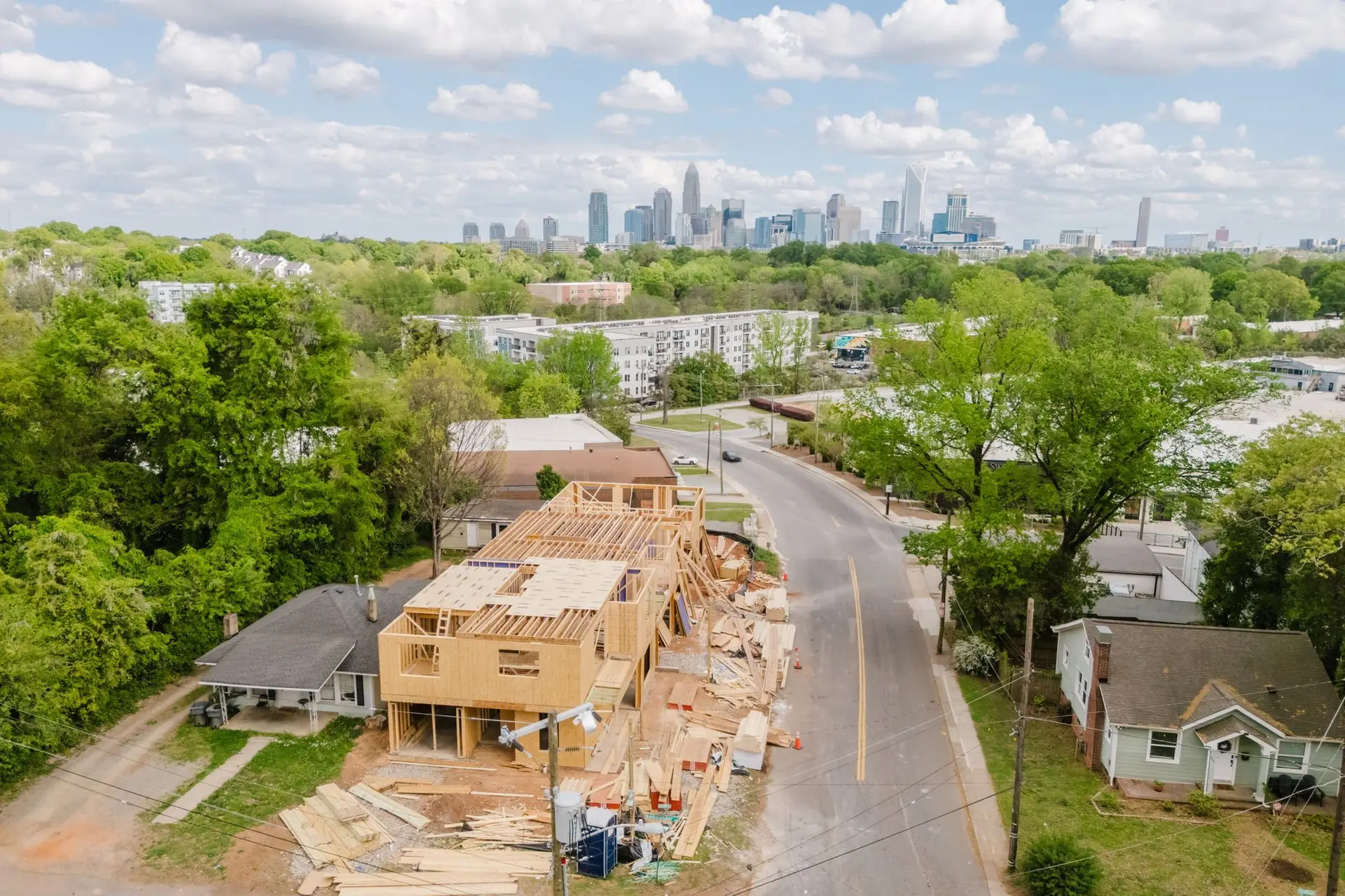
A construction project has two different media problems that most developers conflate. One is the marketing problem: off-plan sales microsites, leasing pages, broker decks, all material that needs to show something is happening on the site, not just renderings. The other is the reporting problem: monthly or quarterly LP updates, permit packages, and the final before-after reel that gets used forever.
These two problems want different cadences, different shot lists, and different edits. What they share is a single technical requirement that sits under everything: frame registration. Every capture at the same altitude, the same heading, the same composition, every time. Get that right, and a year of work stacks into 90 seconds of watchable footage. Get it wrong, and twelve months of aerials become a collage of unrelated pictures.
This is the playbook for construction progress aerials on Charlotte development projects, condo towers, mixed-use, build-to-suit commercial, master-planned communities. How the capture schedule works, what the deliverables are, and why most developers are leaving value on the table by not starting captures at ground-break.
Frame registration, the technical foundation
Frame registration is the discipline of shooting the same frame every time. Same GPS coordinates for the aircraft, same altitude above ground level, same heading, same focal length, same composition relative to the site. Done correctly, the site grows in the frame while everything else, the horizon, the adjacent buildings, the sky line, stays fixed.
In practice, this means:
- Logging the first capture with precision. Aircraft position, altitude, camera tilt, and framing are all recorded. This becomes the template.
- Replicating from the logged position on every subsequent visit. The pilot flies to the same coordinates, matches the altitude, and composes against the fixed reference points from the first capture.
- Shooting multiple reference angles. One primary composition plus two or three secondary angles per visit. When the edit cuts between them, the site reads as a single progressing thing rather than a series of disconnected aerials.
The output stacks cleanly. A 12-month build with monthly captures gives you 12 registered frames that edit together into a 12-second time-lapse. Add secondary angles and the reel goes to 30 to 90 seconds without getting repetitive.
Developers who skip frame registration end up with a library of aerials that look good individually and refuse to assemble into a story. The edit team can do what it can in post, but no amount of stabilization or matching color grade fixes the fact that the aircraft was in a different place every month.
The capture schedule
Different project phases want different cadences.
Pre-ground-break and site prep: one capture before anything happens. This is the “before” frame that every future reel cuts back to. If you’re talking to us after ground-break, we can still start, but the single most valuable capture in the whole project is the one we couldn’t do.
Vertical construction phase: monthly captures. This is where the site changes fast enough that month-over-month footage reads as progress. Weekly would be overkill; quarterly would miss visible change.
Topping-out and close-in: monthly, plus a capture at specific milestones, topping out, facade reveal, signage install. Milestone captures give the marketing team content for press and social on the day of the event.
Finish-out and delivery: two captures in the final 60 days, one during finish-out, one post-delivery with landscaping and site furniture in place. The final capture is the “after” frame that pairs with the very first “before” for the summary reel.
For a 12-to-18 month vertical build, that’s typically 14 to 20 captures total. Delivered as individual raw files to the developer’s asset library, plus a running edit refreshed quarterly.
The deliverable stack
What the captures become depends on who’s watching.
Pre-sale marketing material. Sales microsites for off-plan residential, leasing pages for commercial, brochure inserts for phased development. The aerial proves that the project is real and progressing, buyers and tenants evaluating off-plan commitments want to see dirt moving. A static render on a sales page underperforms an aerial reel showing actual vertical construction.
LP and investor update reels. Quarterly 60-to-90-second reels cut from registered captures. Unnarrated, tight, scored to music, the kind of reel a deck presents around rather than asking LPs to watch a voice-over video. Best-practice length: one captured frame per month of work, three to five seconds each, cut in chronological order.
Broker and agency hand-off packages. For developers working with leasing brokers or marketing agencies, the captures get delivered as raw files plus graded versions for agency integration. Broker decks, tenant-rep presentations, and marketing collateral can pull from the same asset library without additional captures.
Milestone social content. Topping-out, facade reveal, signage install, each captured the day of, cut to a 15-to-30 second vertical for LinkedIn, Instagram, and internal announcements.
Before-after summary reels. The final deliverable that gets used forever: a 2-to-3 minute reel from first capture to final delivery. Pre-sale carries it; leasing carries it; the developer’s portfolio carries it. Lives on the company website as the definitive case study.
Pre-sale marketing specifically
Off-plan sales are the use case where progress aerials earn the most. A buyer evaluating a pre-construction condo or a tenant evaluating a pre-leasing commercial space is making a commitment without a finished product to walk through. Their alternative is renderings, which every competing project also has, and their instinct is risk aversion.
A live-updating aerial reel on the sales microsite, refreshed monthly, reframes the decision. The buyer is no longer evaluating a promise; they’re evaluating a project they can see growing. Renderings show what the building will be. Aerials prove the building is happening.
For Charlotte specifically, the urban-core vertical market (Uptown, South End, NoDa) is saturated with off-plan inventory. Projects that document their build publicly, on the sales page, on social, in broker outreach, differentiate against projects that show renderings only. The media cost is a fraction of one unit’s price.
Airspace considerations for Charlotte construction sites
Most Charlotte construction falls inside CLT’s Class B footprint. That means every capture requires LAANC authorization before the first motor spins. For recurring captures, the authorization is filed per visit, not once, the FAA grid updates and the authorization is tied to a specific time window.
The practical effect: a developer booking monthly captures doesn’t have to think about airspace. We file LAANC as part of each visit’s pre-flight prep. For projects near JQF (Concord Regional) or other regional fields, the authorization workflow is the same but routes through different grids.
Altitude for construction progress is typically 200 to 400 feet AGL. The standard 400-foot ceiling applies; the structure exception (400 feet above the structure’s highest point when flying within 400 horizontal feet of the structure) comes into play once the build reaches three to four stories and above. For tower projects specifically, the ceiling gets negotiated capture by capture based on where the build is.
The regulations and insurance post covers the compliance picture in detail, including COI availability and additional insured endorsements for GCs and developer entities.
Pricing and retainer logic
Construction progress is priced on capture schedules, not per shoot. Single-capture rates don’t reflect the operational reality, the value is in the stack, and the pricing should match.
Typical structure:
- Founding-client retainer: locked-in per-capture rate for the life of the project. For a 12-to-18 month vertical build at monthly cadence, this works out to a material discount versus one-off pricing.
- Deliverable tiers: raw files only, raw plus graded, or raw plus graded plus quarterly edited reels. Most developers land in the middle tier, graded captures they can hand to the marketing team as needed.
- Milestone add-ons: topping-out captures, facade reveal days, and grand-opening events are priced separately and scheduled around the developer’s event calendar.
We scope developments as founding clients right now while the practice area is building book. Onboarding new projects at retainer pricing locks that in for the life of the build.
The value of a construction progress reel is compounding. Month one’s capture isn’t worth much on its own. Month twelve’s capture paired with month one’s first frame is worth a sales page, an LP deck, and a permanent portfolio asset. Developers who start captures at ground-break get the full stack. Developers who start mid-build get a partial one.
If you’re breaking ground in Charlotte in 2026 or have a project mid-build, send location, timeline, and expected delivery to contact@oneshotdronetours.com. The commercial pillar post covers the broader CRE, business, and hospitality practice areas, and the commercial page has the developments vertical laid out with the full scope picture. For single-build custom and spec marketing aerials specifically, see new construction builder marketing aerials in Charlotte.
Related journal posts
The Commercial Drone Media Playbook for Charlotte CRE
How Charlotte CRE brokers, developers, business owners, and hospitality operators use FPV and aerial drone media to lease space, close deals, and fill seats, across all four commercial verticals.

Remote Business Tours for M&A: FPV Walkthroughs Without the Plane Ticket
An operational primer on using FPV walkthroughs for business-sale and M&A processes, pre-qualifying buyers remotely, protecting seller confidentiality, and moving deals forward faster.

Drone Regulations + Insurance: What Clients Should Actually Ask About
A direct explainer on drone regulation and insurance. Part 107, Remote ID, LAANC, liability limits, and what a COI means for your shoot. Written for clients, not pilots.