FPV Drone Tours for Charlotte Real Estate: The Full Playbook
How we plan the route, direct the agent, pick the gear, and deliver the cut. The complete field guide to shooting an FPV tour on a Charlotte listing.
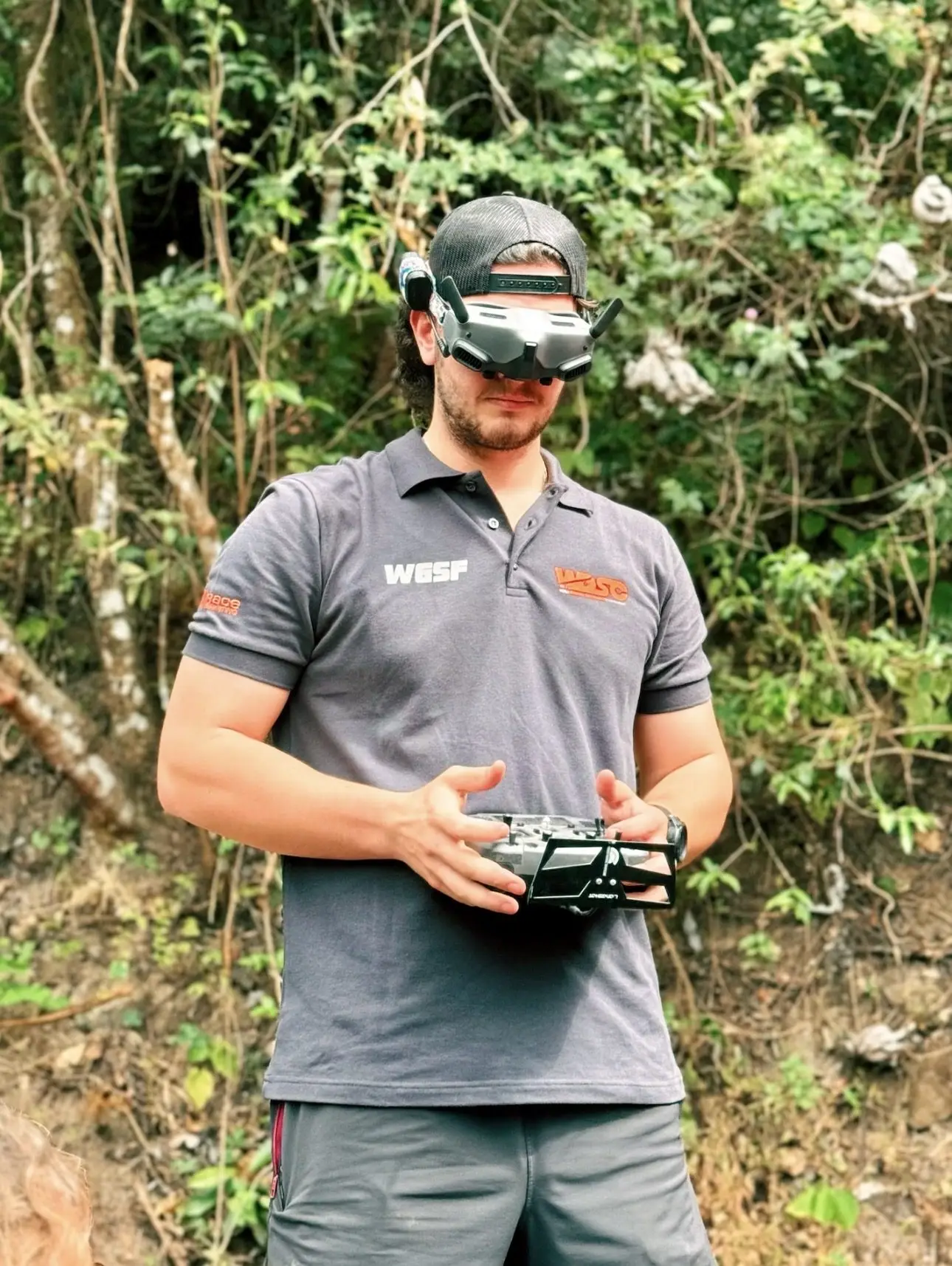
FPV drone tours are the clearest way to pull a listing’s media away from the format every other listing is using: the phone walkthrough, the gimbal exterior, the fifteen interior photos. They’re not a gimmick. They’re a specific technique with a specific skill curve, and when they’re done well, they’re the difference between a buyer scrolling past and a buyer watching the whole flythrough before they call.
This post is the complete field guide: how we plan the route, how we direct the agent, what gear we fly, what lands in your inbox 24 hours later, and where the tour fits inside a full listing kit. Charlotte-specific, OSDT-specific. The version that comes from actually shooting these every week.
What an FPV drone tour actually is
FPV stands for first-person-view. The pilot flies the drone from goggles that stream live video from the rig’s nose camera. No line-of-sight, no gimbal, no auto-hover. What you feel watching an FPV tour is a direct translation of what the pilot is seeing and steering in real time.
The drone itself is smaller than people expect. Our indoor and residential rigs are ducted sub-3-inch frames, small enough to fly through a front door, down a hallway, and out a second-floor window without touching the trim. The camera is the DJI O4 Pro air unit mounted on the nose of the rig; it records log 4K directly onboard and streams a lower-res live feed to the goggles in parallel. One camera, one file, no separate GoPro.
The thing FPV actually changes is continuity. A phone walkthrough cuts every time the agent turns a corner. A gimbal drone can’t fit inside the house. FPV is the only tool that can connect the exterior approach, every interior room, and the exterior exit into a single unbroken shot, the way a buyer would experience the house if they showed up and took the tour themselves. That’s the entire point. If you want the deeper version of the why behind FPV, the technology breakdown is on the FPV page.
Planning the route: outside in, collaborative, one take
Every shoot starts with a route. The agent knows the house. I know the flight. We sketch it together before the rig leaves the case.
The default route is outside-in: exterior approach, through the front door, around the main living spaces, and up the stairs. The move most agents don’t expect is the reverse. To connect the first and second floors cleanly, we’ll often fly back out a ground-floor window or door, around the exterior, and re-enter through a second-floor window. That outdoor-to-indoor-again beat is what lets us show exterior scale and interior flow in a single unbroken shot, and it’s usually the moment a viewer’s brain locks onto the geometry of the whole house.
The route is collaborative. The agent flags the rooms that matter most: the kitchen, the primary, the view from the back porch. I flag the pinch points: the chandelier over the dining table, the narrow hallway with the art piece, the ceiling fan in the basement. Ten minutes of planning on the ground saves an hour of reshoots in the air.
Once the route is set, we walk it. No drone yet, just the two of us following the exact path the flight will take. The agent practices their cues. I practice the line. By the time the rig leaves the case, both of us know the shot.
Filming day: ten to fifteen minutes, first or second take
Planning and setup on a typical listing run about 15 to 20 minutes: the route walk-through, the rig check, and the agent’s cue rehearsal. Actual FPV filming, both videos captured off the same flight, is another 15 minutes. On a Drone Tour standalone we are done in under 45 minutes total. On a Standard package we are typically on-site about 1.5 hours because of the full kit (FPV plus HDR interior and exterior, plus aerials, plus the CubiCasa scan, plus twilights). We almost always nail the FPV on the first try. Not because the shot is easy; because the planning did the hard part.
The agent has two or three cues: open the front door exactly when the drone’s nose clears the porch, fluff a pillow on the couch as we pass the sofa, gesture to the back yard as we enter the sunroom. I call each cue from the goggles (“three, two, open”) and the tour becomes interactive. The agent is in the shot without being the subject. Done right, a viewer feels like they’re being walked through the home by someone who lives in it.
Because each flight is one continuous take, there’s no cut to hide a mistake. That’s also why the prep matters. The version you see in the final cut is the clean take, the one where nothing went wrong.
Your two deliverables: the MLS cut and the social cut
Every FPV drone tour is captured once in log 4K and then produced as two separate videos from the same source:
- The MLS cut. The full tour. Every room, one take, typically 2 to 3 minutes. Horizontal 16:9. Built to play on the MLS detail page and on the listing’s dedicated microsite.
- The social cut. The highlights. Under 60 seconds. Vertical 9:16. Built for the agent’s Reels, TikTok, and broker-wide social feeds. It shows the best rooms, not every room, and it’s paced for a scroll.
Both cuts are delivered with 2–3 licensed music options per video type. You pick the one that matches the listing’s vibe: moody for a mid-century modern, warm for a country club colonial, up-tempo for a downtown loft. If none of them land, one round of revisions is included on every package.
Delivery is 24 hours from wheels-down. Shoot Tuesday afternoon, MLS-ready files in your inbox Wednesday afternoon. Both cuts, together, every time.
Drone Tour only vs. the Standard package, the all-in-one
FPV is a product and it’s a piece of a product. You can book just the tour, or book the whole kit.
- Drone Tour ($395). FPV flythrough, MLS cut, social cut, 24-hour delivery. That’s it. Best for listings that already have strong interior photos and just need the flythrough to round out the media.
- Standard ($595). The most-booked tier. Adds HDR interior photos, exterior aerial photos, a 2D floor plan rendered via CubiCasa, an interactive 3D tour, and 2 virtual twilights. Same 24-hour delivery. You don’t coordinate three vendors; we bring the full team in one visit.
- Elite adds a dedicated cinematic property video with licensed score, extended aerial sequences, and FPV used inside the cinematic edit, not just as the standalone flythrough.
Most of our residential work is Standard. Drone Tour exists for the agents who already have a photographer they trust and just want to add the flight. Full package or à la carte, your call. The pricing page has the complete rate card.
Why one-click FPV replaces Matterport for most listings
Matterport is a 3D-scan platform. A buyer clicks and drags to move through the house on a static point-cloud model. It works. It’s also slow, passive-on-the-wrong-dimension, and built for a buyer who already wants to tour the house.
FPV is the opposite trade-off. The buyer hits play, and the tour happens to them in sixty seconds: the full geometry of the house, the flow, the scale, the light. No clicking, no dragging, no learning a navigation. That’s why it performs on social: the content wants to be consumed passively, and a passive format has a much bigger funnel than an active one.
For most Charlotte listings at the price points we shoot, the question isn’t “do we need a Matterport scan.” It’s “what’s the format that gets the most buyers to watch the whole thing before they close the tab.” FPV wins that comparison, and if you want a floor plan for the agent-to-agent side of the listing, the 2D CubiCasa plan in the Standard package covers it at a fraction of the cost.
(The one case where Matterport still makes sense: ultra-luxury listings where out-of-town buyers are doing full decision-making remotely before flying in. For that scenario, the FPV tour plus a Matterport scan is the belt-and-suspenders approach. For everything else, the FPV tour is the main event.)
The gear: DJI Avata 2 or Spydr iTSY Evo
Two primary rigs, picked per property:
- DJI Avata 2. The slightly safer, slightly more forgiving option. Self-stabilized when the pilot releases the sticks, ducted props, onboard DJI O4 camera recording log 4K. Good for simpler single-level layouts or listings with lots of soft furnishings we don’t want to catch.
- Spydr iTSY Evo with DJI O4 Pro. Our workhorse for complex shoots. Tighter and faster than the Avata, with a DJI O4 Pro air unit up front recording the same log 4K format. Picked for multi-level homes, tight transitions, and listings where the cinematic edit is going to lean hard on the color grade.
Both rigs record log 4K on a single camera. No separate GoPro, no second body. Both fly on DJI’s O4 digital video link for a clean, low-latency feed to the goggles. Both are tuned in-house. The deeper gear breakdown (the full list of what we fly, and how the cinelifter rigs come into production work) is on the FPV page, and the full equipment guide will land in the journal shortly.
For the Elite package, we sometimes also use FPV inside the cinematic property video, not as the standalone tour, but as a dynamic sequence woven into a broader cinematic edit with gimbal ground shots, time-lapses, and licensed score. That’s a different workflow, and it’s priced accordingly.
Thousands of hours, Part 107, and $1M insured
The rig isn’t the thing that makes the shoot work. The operator is.
The team’s combined FPV time is measured in the thousands of hours: simulators, practice fields, paid shoots. I’ve been flying since 2021 and have logged hundreds of millions of dollars of Charlotte real estate by now. Every pilot on the team holds an FAA Part 107 commercial certification, and we file LAANC authorizations for controlled airspace ourselves when a listing sits under CLT’s shelf.
We carry $1M liability insurance on every shoot, with certificates of insurance (including additional-insured endorsements) available on request, usually same-day. Nothing in your listing, or your sellers’ property, is taking on risk we haven’t already underwritten.
The rig is the camera. The operator is the shot. Both matter, and neither is optional.
If you’re deciding between FPV and a traditional photo-or-video-only shoot, the FPV vs. traditional comparison post covers what each format actually wins at. If you’re booking a shoot for the first time, what to expect on shoot day walks through staging, access, and delivery. And if you want to see what one of these shoots actually did on a real Charlotte listing, the 714 Larkhall Lane case study has the numbers.
Most of our work is still on first-time agent bookings who heard about us from a colleague. If that’s where you are, the Residential page has the pricing, the portfolio, and the direct path to the booking portal.
Related journal posts
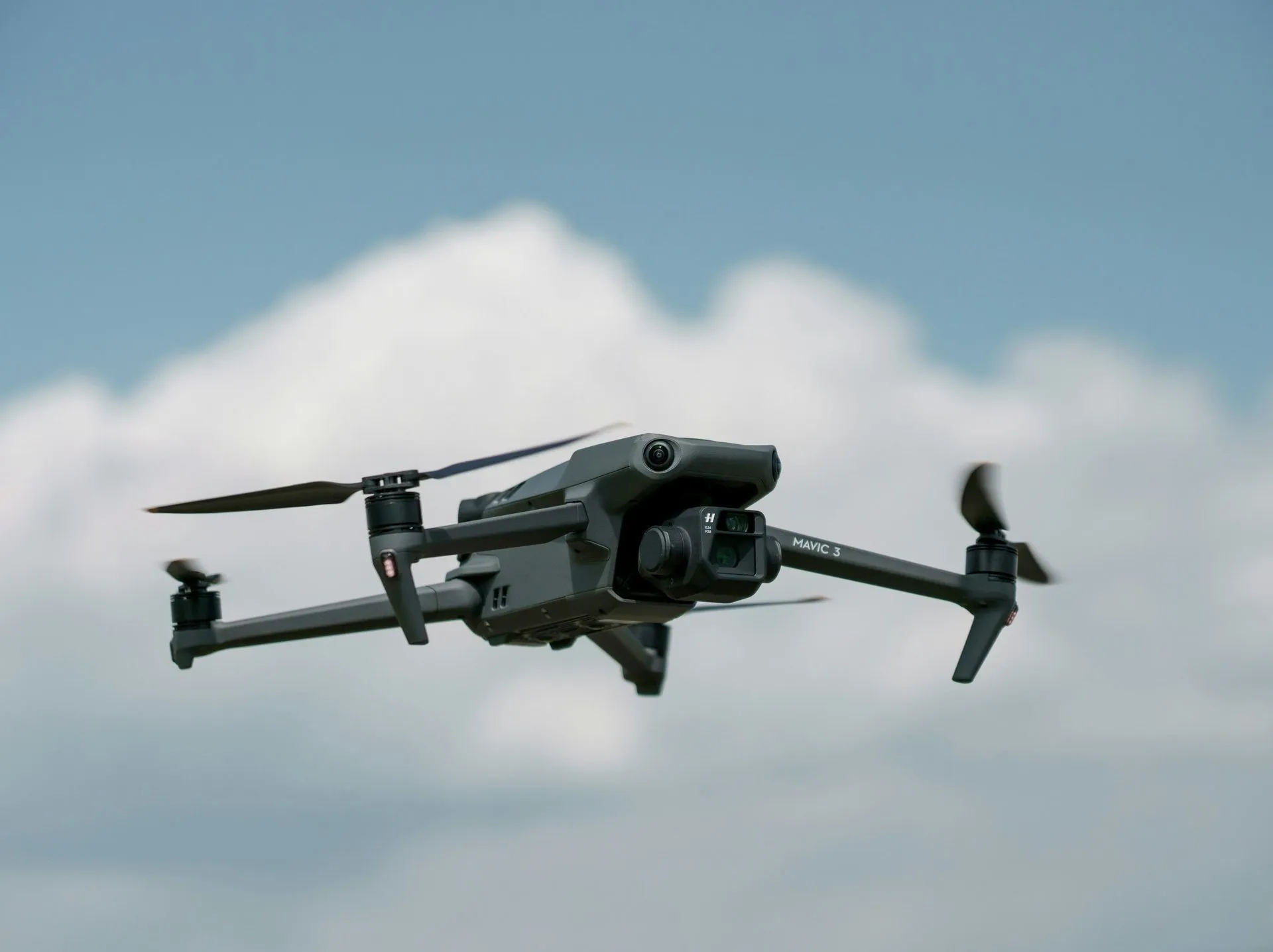
FPV vs. Traditional Drone Footage: What Changes in a Listing Video
Why FPV reads differently than gimbal drone footage, what scenarios each tool wins in, and how to think about which one belongs in your listing package.

Seller's Prep Checklist: How to Get Your Listing Ready for Shoot Day
What to do before the crew arrives, interior staging, exterior cleanup, fans, window screens, cars, and pets. The prep list that keeps the shoot on schedule and the final cut clean.
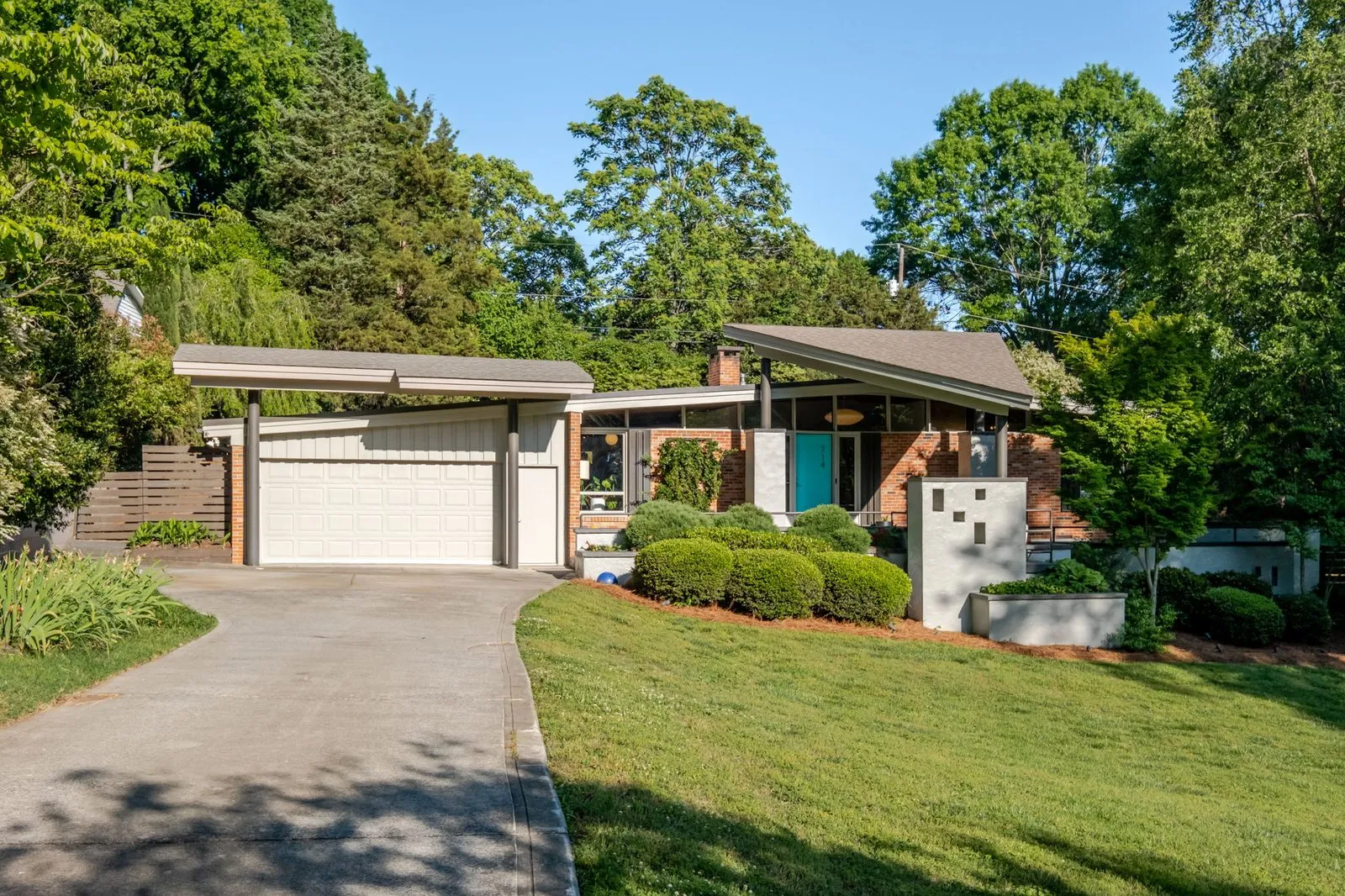
714 Larkhall Ln. Sold $75,000 Over List, Pending in Under a Week
$980K list → $1,055,000 sold (+7.7%). Pending inside a week with 150+ saves and 20+ showings. Standard package.